Growth through faithful care
What if you could give more faithful care, and grow the revenue to sustain it?
Most of us in Catholic health care would give as much faithful care as we could, if we knew we could afford it. The Caritas Index is a roadmap we’re building to help Catholic clinics do just that, and thrive because of it. It’s for Catholic physicians who run a practice, and for everyone who wants to help them. We’re now accepting our first beta clinics.
You may already be doing more than you realize
Your practice doesn’t have to look Catholic for this to fit. A family practice, an orthopedic group, a 4-doctor office, openly Catholic or quietly so.
- Faithful care is taking the time to know each patient as a person.
- It’s looking after the people who work beside you, with support for their faith if they want it.
- It’s offering spiritual care to every patient who wants it, and never pressing it on anyone.
- And it’s helping seriously ill patients plan for the care they want.
Much of that may already be happening in your practice. The Caritas Index helps you see it, grow it, and know what it returns.
Why faithful care is hard to put first
Running a practice is hard. Health care gets paid by the visit and the procedure, so the extra time with a patient, the attention to the spirit, and the support for your staff never show up as income. They show up as cost.
And no one has put the numbers to what that care gives back. So faithful care gets treated as an expense instead of an investment.
A roadmap for each clinic
The Caritas Index brings Catholic clinics together to find out what’s working. For each clinic, it lays out the faithful practices that would do the most good there, what each one costs, how to put it in place, and what it returns. Return means more than money. It counts what happens for your patients, for your staff and the culture they work in, and for your bottom line.
Every clinic is measured the same way. We look at what a clinic does, never at what anyone believes, and no clinic is ranked against another. What we learn goes back to every clinic as a path it can follow. The purpose is growth, never grading.
Your data, and where AI fits
Your clinic stays in control of its data. Before any patient record leaves the practice, the clinic signs a business associate agreement, the agreement the federal patient privacy law (HIPAA) requires. Only the data the review needs is kept. We remove names and other direct identifiers, and in anything shared beyond the clinic, any number small enough to point to a person is hidden.
Joining means a clinic’s data, with names removed, is combined with other clinics’ data, so each clinic benefits from what all of them learn. A clinic decides who sees its own results. It can leave at any time, and its data is returned or deleted and left out of all future combined results.
Artificial intelligence (AI) does the slow, repetitive analysis, so people can spend their time on judgment and care. We use it only through accounts that bar the AI company from training on clinic data. Every number comes from code that can be rerun and checked, and a person reviews it before the clinic sees it.
Accepting Beta Clinics
We’re looking for a few Catholic practices, openly Catholic or quietly so, to be the first to put the Caritas Index to work. For these first clinics, the plan is that they pay nothing for their growth review or their monthly progress reports.
- A growth review of how your practice works today, and what it could do next
- A monthly progress report with your own numbers
- No new software, and no reports your staff have to build by hand
Apply now or write to matthew@caritasindex.org
To apply, send your practice’s name, city, and number of physicians. If it looks like a fit, we’ll set up a short call.
Know a practice that should be part of this? Forward them this page. Want to help fund the first clinics? See what a founding gift makes possible.
Where this leads
We’re starting with small Catholic clinics because they can move fast and give us real evidence sooner. That evidence is what we hope Catholic hospitals will want to see next.
Every clinic stays independent and runs its own business. The evidence gives each one something real to bring to its own conversations with insurers and employers. The goal is a network of faithful clinics that employers and health plans can ask for by name, and later, Catholic coverage plans built around it.
Many people assume faithful care has to cost more. Catholic employers who want health plans that follow Church teaching often pay more for them, and some call that the Catholic tax. If faithful care proves to cost less, that assumption falls apart, and the Catholic tax argument with it. If it costs more in some places, we’ll say so.
Every clinic that does this work becomes an example for the next, so more of them give more of God’s love to the sick and the dying.
Founder
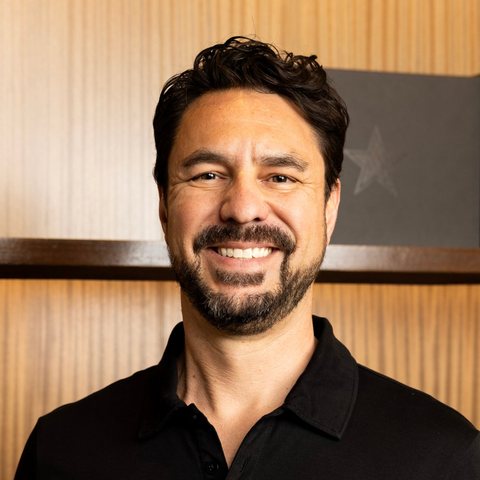
Matthew Dandurand is the founder of the Caritas Index, an independent research initiative using the data Catholic hospitals and clinics already report to show that authentically Catholic practice costs less, works better, and helps the institutions that live it thrive. After returning to the Catholic faith, he left a twenty-year career in applied research and strategy to lead the work full time. He founded ConversionFlow, a research and optimization firm that combined behavioral psychology, data science, and artificial intelligence to help more than one hundred organizations understand why they grow and what stands in the way. He designs and builds agentic AI systems that support human work rather than replace it, taking on the repetitive analysis so people can focus on judgment. He holds an MBA from Loyola Marymount University and completed the Post Graduate Program in AI Agents and Generative AI for Business Applications at the University of Texas at Austin's McCombs School of Business.
What a founding gift makes possible
The plan is for a founding gift to carry the first clinics. It pays to build the tools that measure and report, so every clinic after them is measured the same way. It covers the first clinics’ reviews and monthly reports. And what they learn becomes the starting path for every clinic that follows. A donor sees a clinic’s results only as that clinic agrees.
If you’d like to help get the first clinics started, I’d love to talk.
Get in touch
If you’re a Catholic physician who runs a practice, I’d like to hear from you. The same goes for Catholic employers and health plans, Catholic hospitals, and anyone who wants to help the first clinics get started. Write to me. If it looks like a fit, we’ll set up a short call. If not, no hard feelings.
Matthew Dandurand, founder